Ignazio Gardella
Milan, 1905 — 1999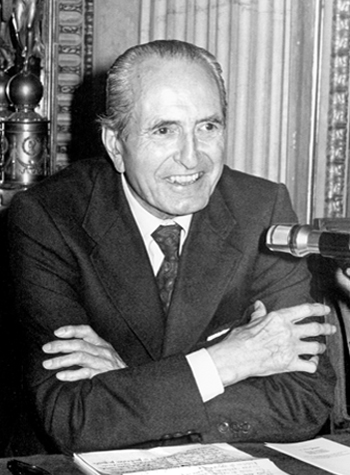
Born in Milan in 1905, Ignazio Gardella came from a long line of architects. He studied civil engineering at the Politecnico di Milano (1931) and later completed a degree in architecture in Venice (1949)—two disciplines that would ultimately merge in his rigorous, open, and sensitive approach to design and construction.
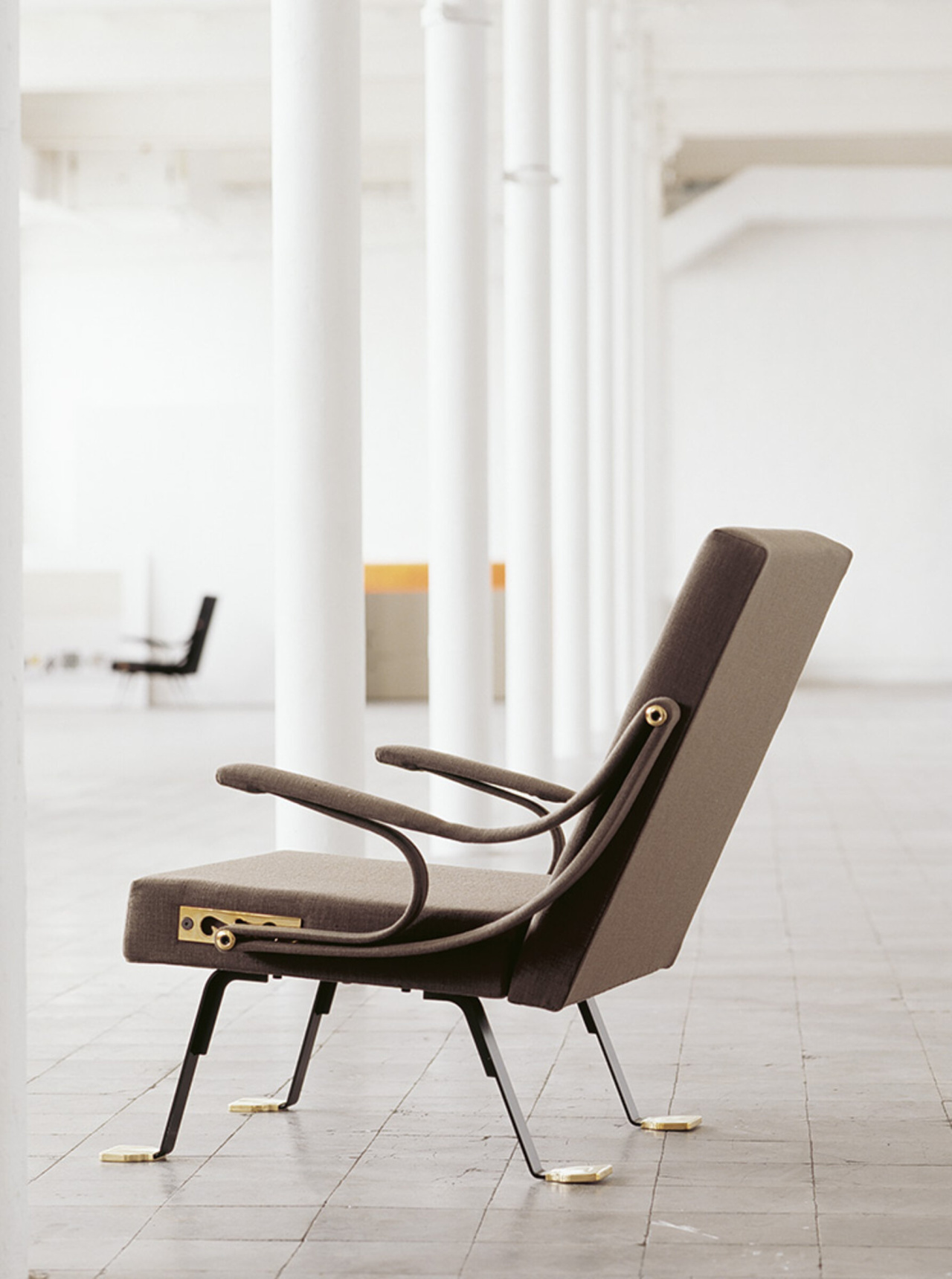
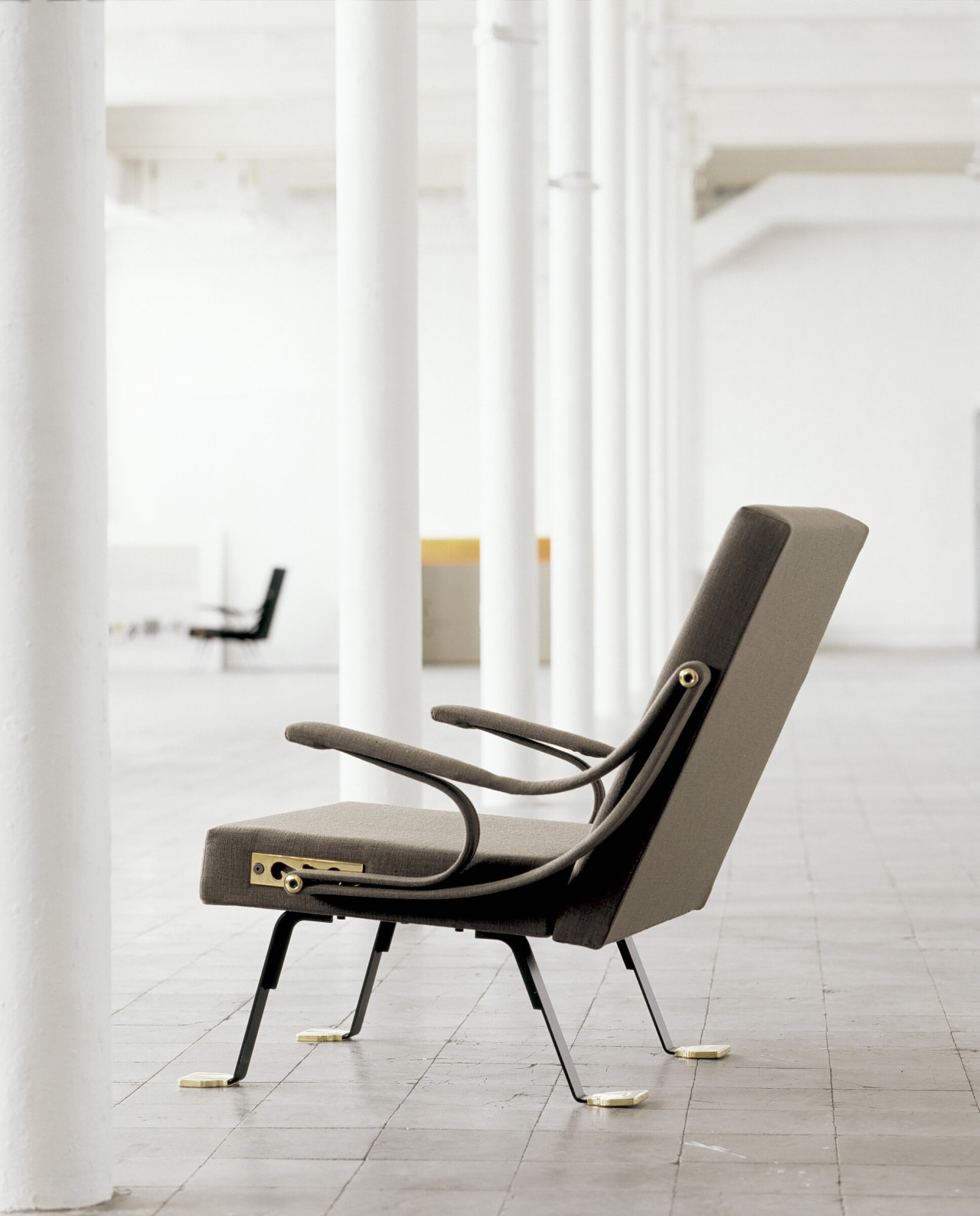
His first professional steps were closely tied to the world of design, collaborating with firms such as Olivari, Azucena, and especially Gavina, for whom he created pieces that still endure today for their timeless elegance, like the Digamma armchair. As a designer, Gardella consistently balanced an eclectic eye with exacting standards, bringing together diverse styles into objects of remarkable aesthetic harmony.
The same holds true for his architectural work. From early on, Gardella recognized the need to move beyond rigid dogmas: in 1935, he published his first projects in Casabella, the influential magazine led by Ernesto Nathan Rogers, one of the most innovative circles in Italian architectural thinking at the time.
Convinced that architecture had to evolve, Gardella co-founded the Movimento Studi Architettura in 1945 alongside other young Milanese architects. From 1949, he taught for more than 25 years at the Istituto di Architettura in Venice and took an active role in the CIAM (Congrès Internationaux d’Architecture Moderne), contributing to the broader European debate on the future of the discipline.
Gardella’s architectural career began with the Anti-Tuberculosis Dispensary (1938) and the Provincial Hygiene Laboratory in Alessandria—both regarded as model examples of Italian Rationalism.Nevertheless, despite being one of the leading figures of the Modern Movement in Italy, Gardella sensed from early on the need to move beyond the rigid boundaries of rationalist style. Rigor and freedom remained, simultaneously, his guiding principles.
Over the years he left his mark on projects as varied as the Borsalino housing in Alessandria (1950), the Contemporary Art Pavilion in Milan (1951), the Casa delle Zattere in Venice (1958), the Olivetti canteen in Ivrea (1958), the Alfa Romeo offices in Arese (1969), and the reconstruction of the Carlo Felice Theater in Genoa (1991), in collaboration with Aldo Rossi.
He received numerous awards, including the Olivetti National Architecture Prize (1955) and the Fiuggi Prize (1988), and was named honorary member of both the Accademia di Belle Arti di Brera and the Accademia di San Luca.
Self-critical and always in motion, Gardella believed that architecture should never become fossilized: “Architecture cannot be limited to a formula—only the eye and sensitivity are truly indispensable tools.”