Campomanes
Madrid, Spain
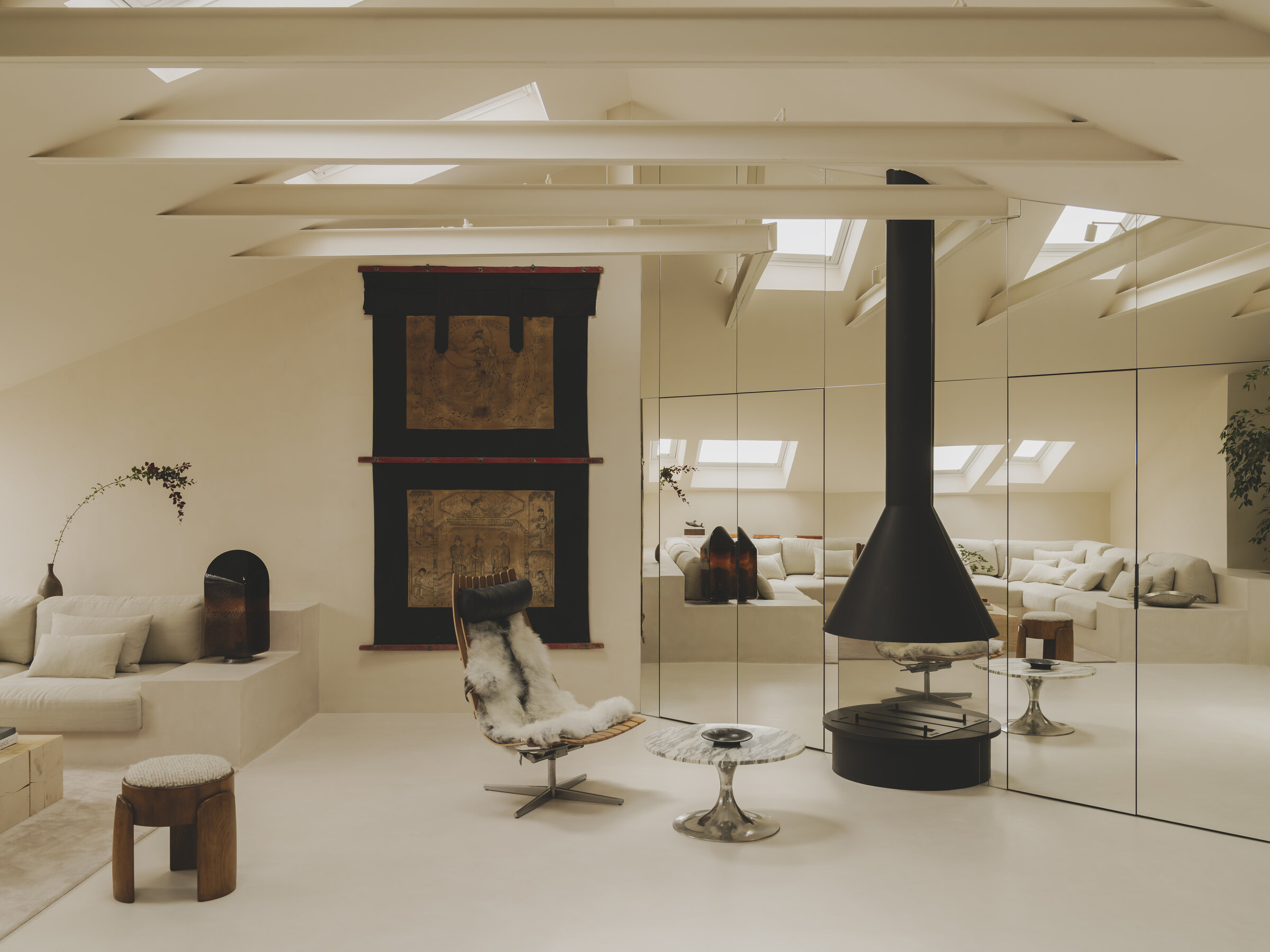
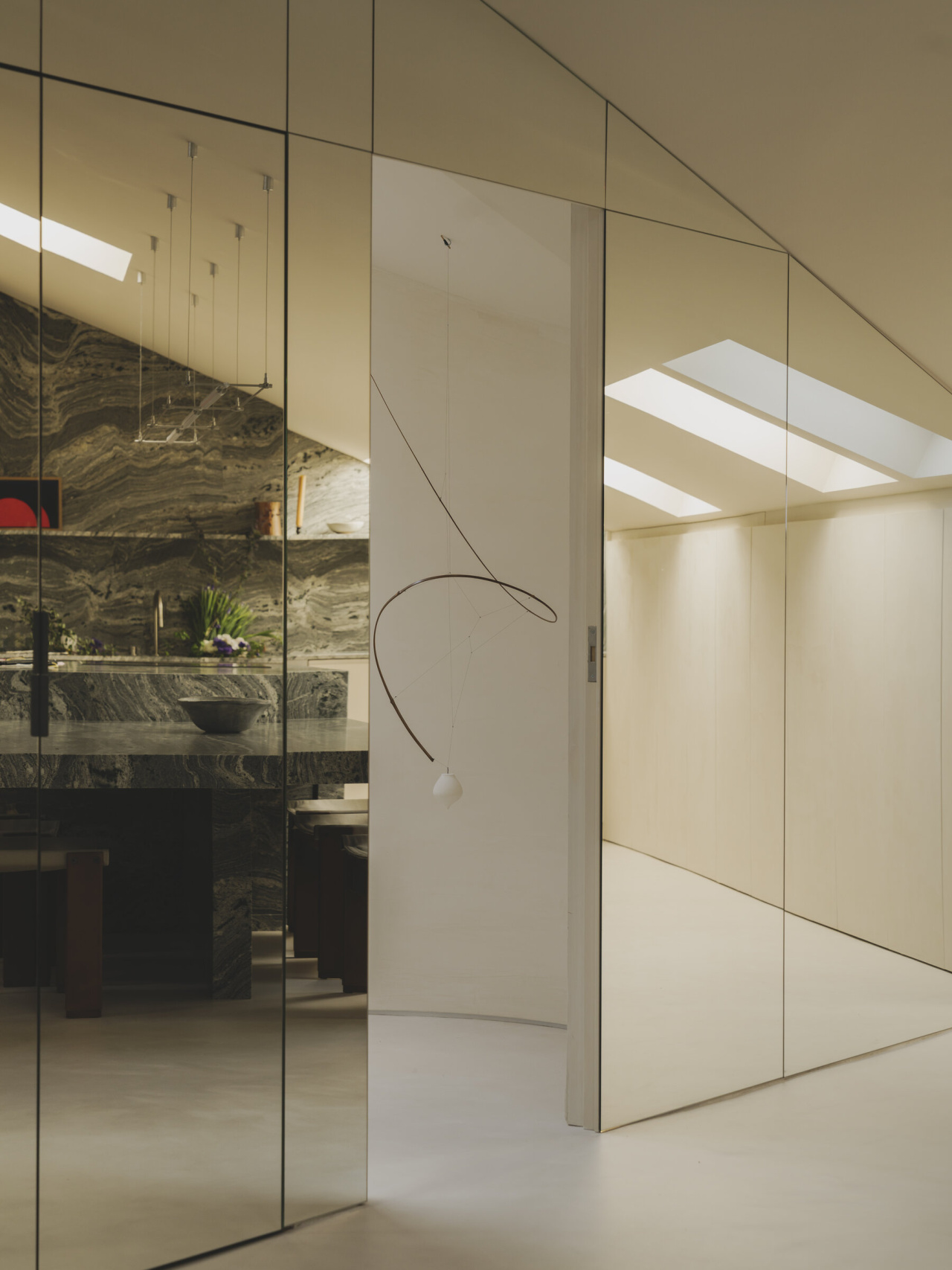
Sierra + De la Higuera describes this Madrid penthouse as an exercise in spatial clarity. The building is an 1890 palace a few steps from the Teatro Real. What the studio did was take a loft-like space — awkward roof geometry, dramatic skylights — and strip it back until it made sense.
That meant a full gut renovation. Decades of partition walls and dropped ceilings came out. What was underneath turned out to be the whole point: slopes, angles, and light coming in from above. Instead of smoothing all that out, the architects leaned into it. The pitched ceiling and the skylights are now the design. Natural light moves through the apartment across the day, filtered down through the dense fabric of central Madrid.
The layout is a U-shape, which sounds simple but works. On one end: open-plan living, kitchen, dining. On the other: the bedrooms, more private, with access to a terrace. No corridors. You move through the apartment by sight lines, not by doors.
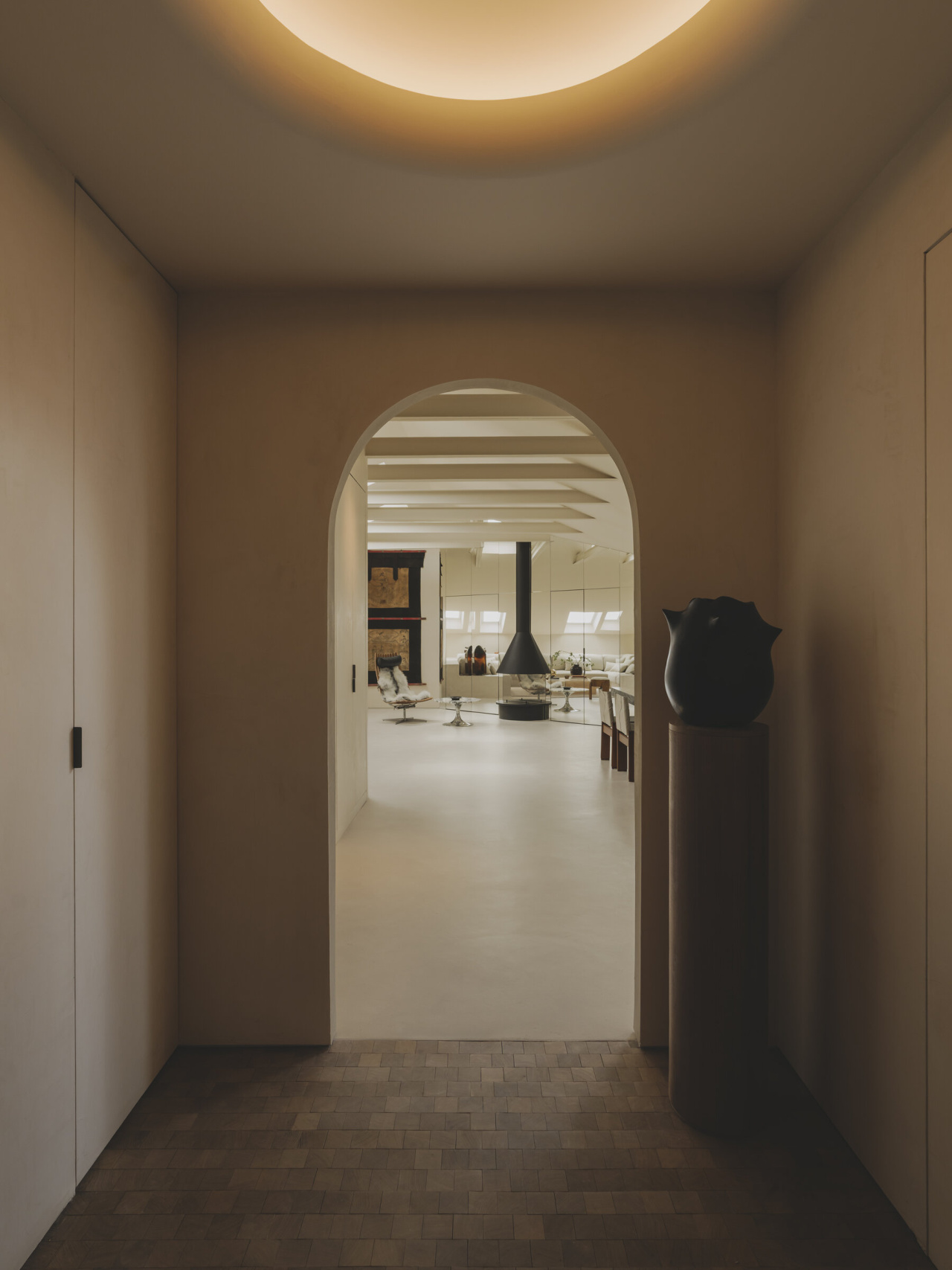
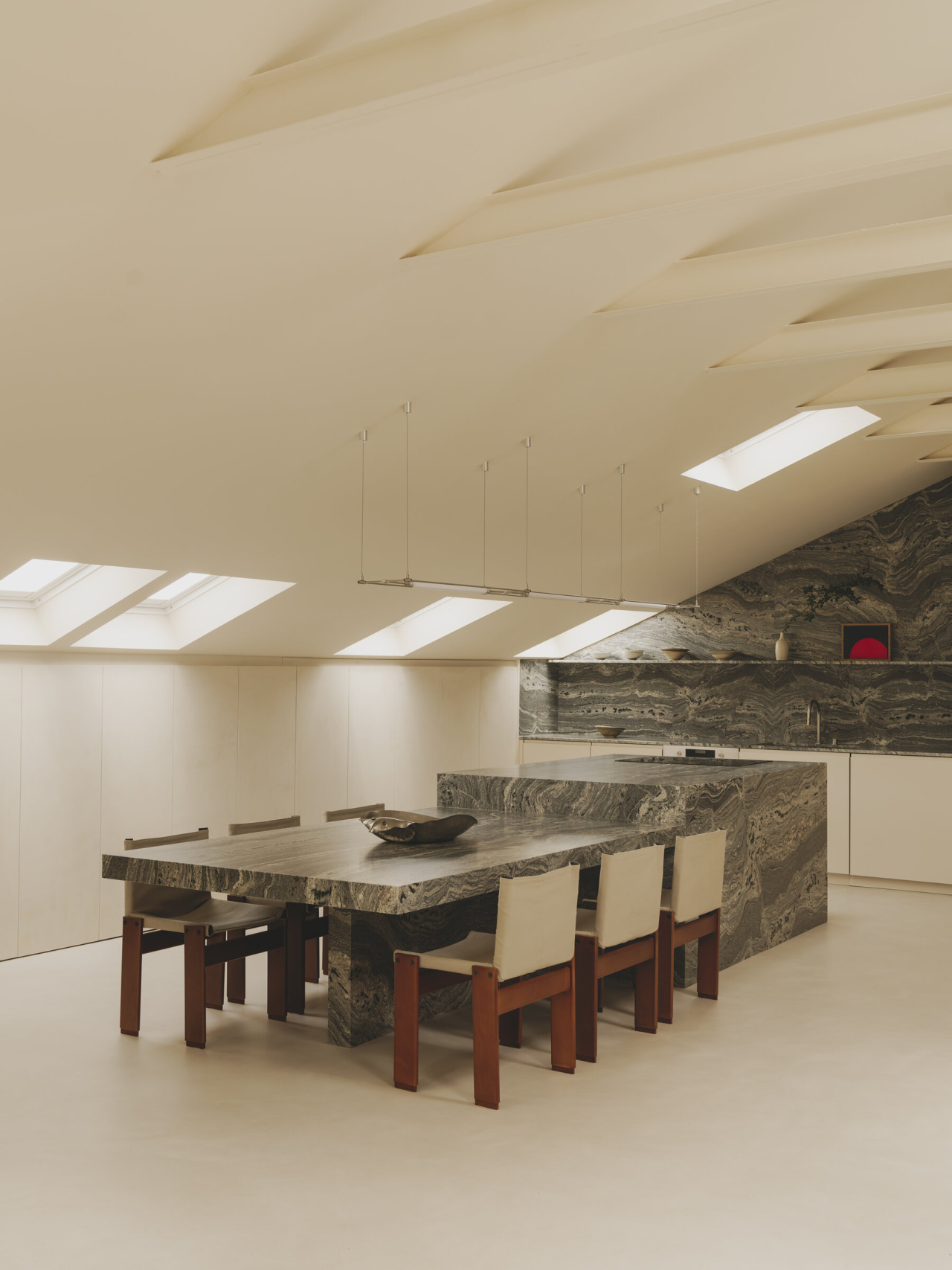
Everything is pale and flat — micro-cement floors, plaster walls. Wood and stone show up in the custom furniture and finishes, adding texture without breaking the calm. The building is nineteenth century; the apartment reads as now. That tension is what makes it interesting.
The Sylvestrina wall sconce is a 1974 design by Enric Sòria and Jordi Garcés, originally inspired by traditional oil lamps. Metal base, translucent diffuser, glass shade — minimal in the best sense. Against the plaster walls here, it throws a soft, even light that makes the rooms feel larger than they are.
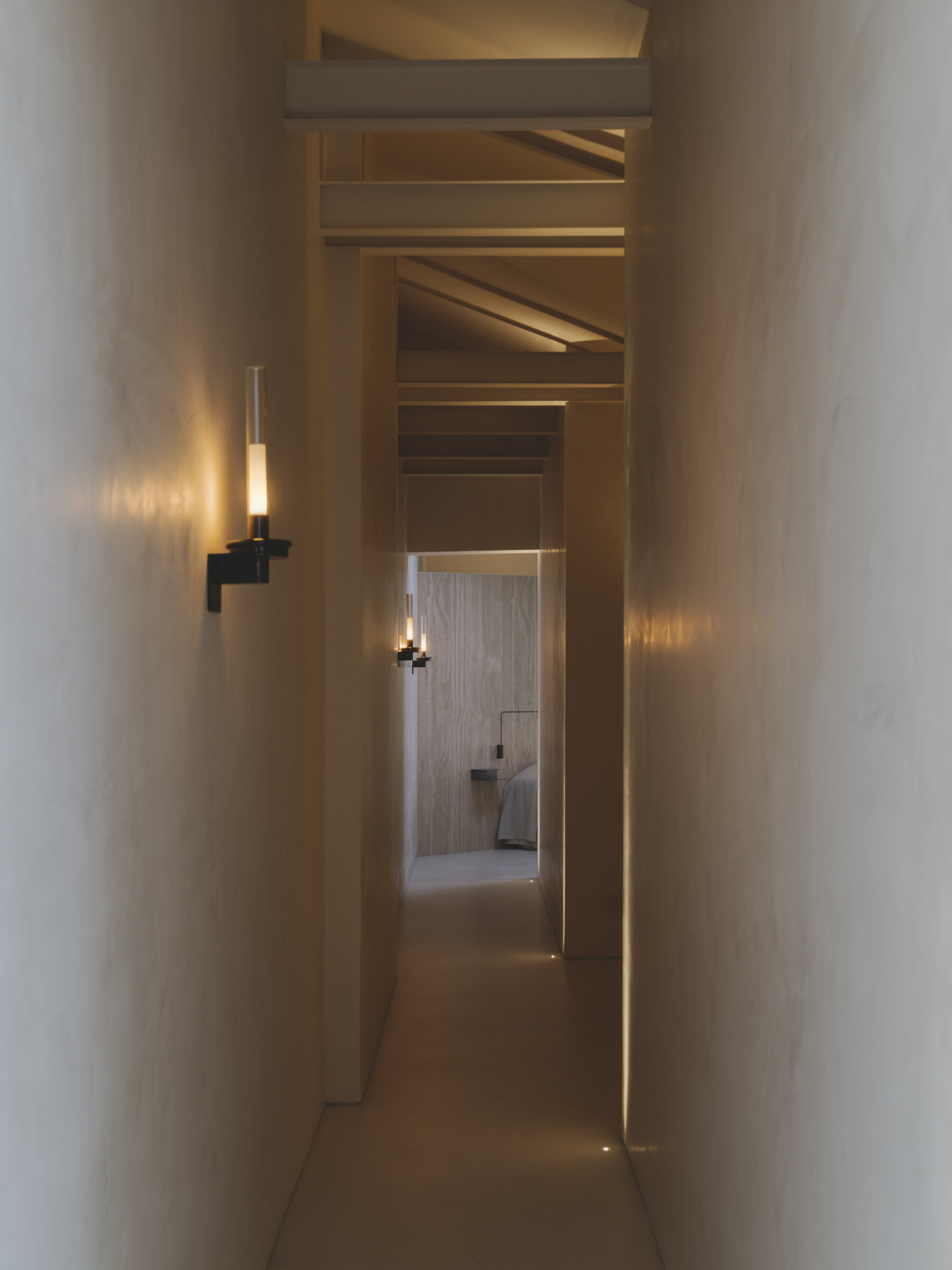
Sylvestrina 2021, Enric Sòria, Jordi Garcés
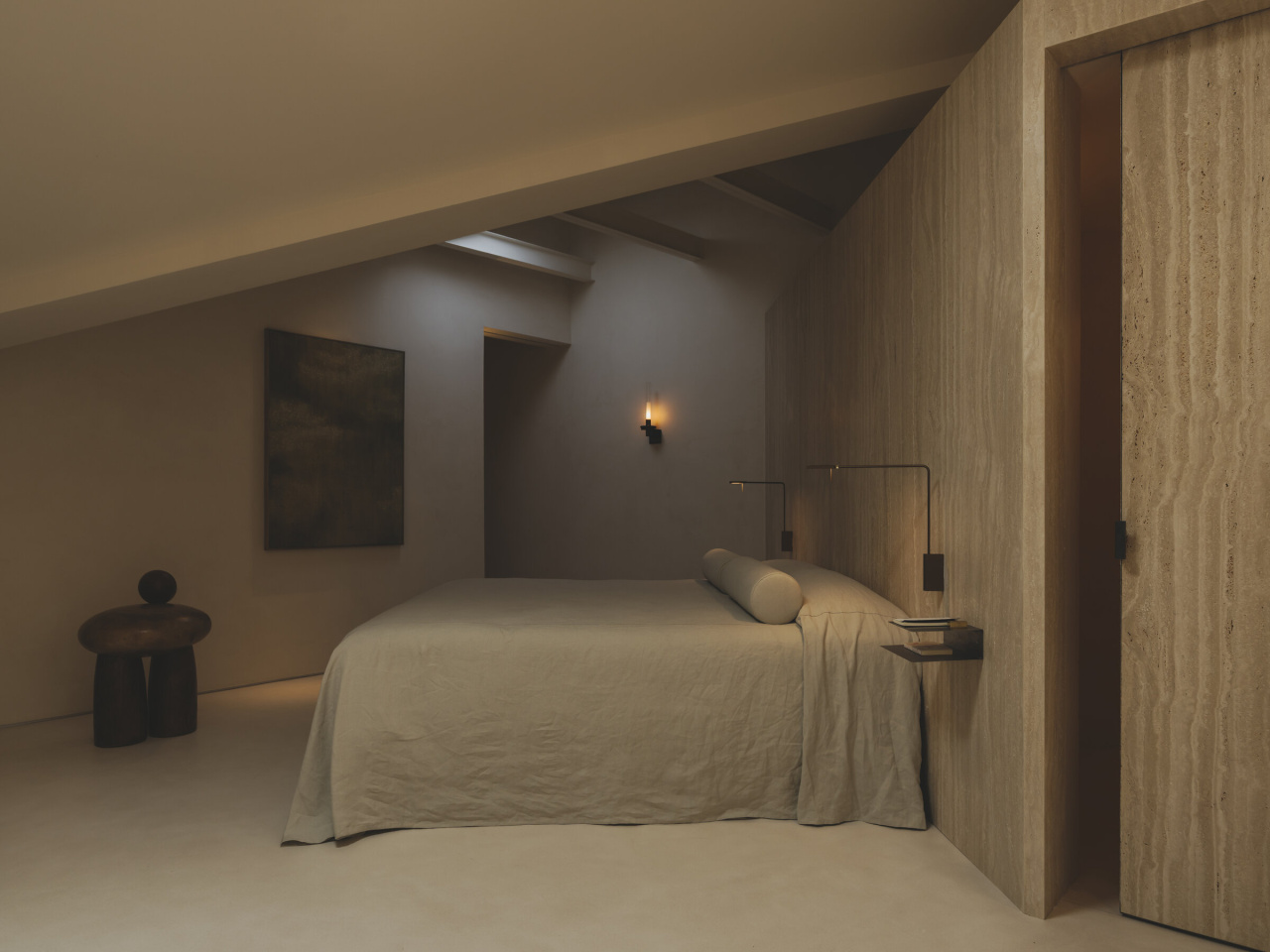
Sylvestrina 2021, Enric Sòria, Jordi Garcés