
Toune Machiya
Una casa que conserva su historia sin dejarse dominar por ella.
Continuity and renewal in a 120-year-old Kyoto "machiya" by Keiji Ashizawa Design.
Barcelona
,
Spain
Design:
Photography:
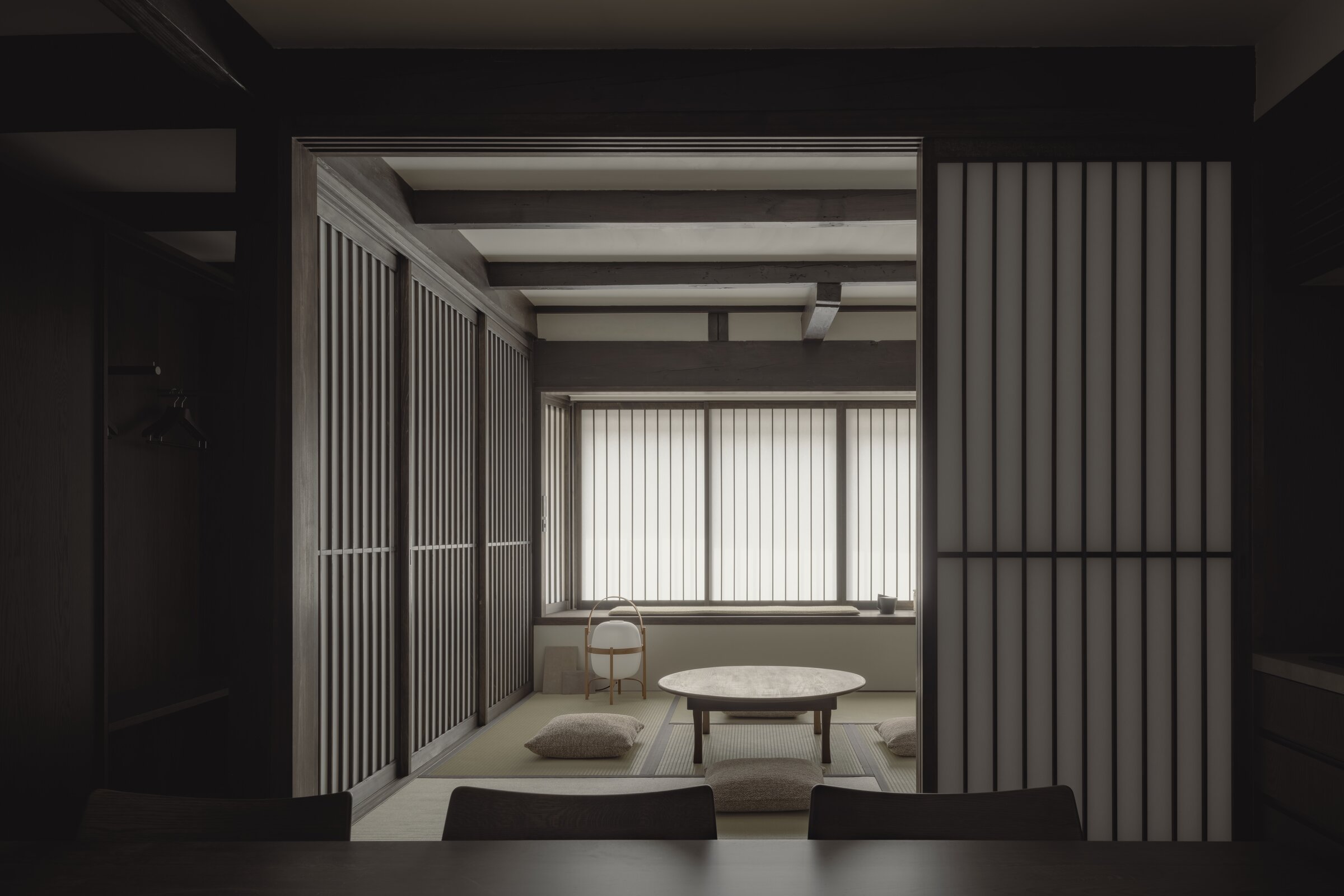
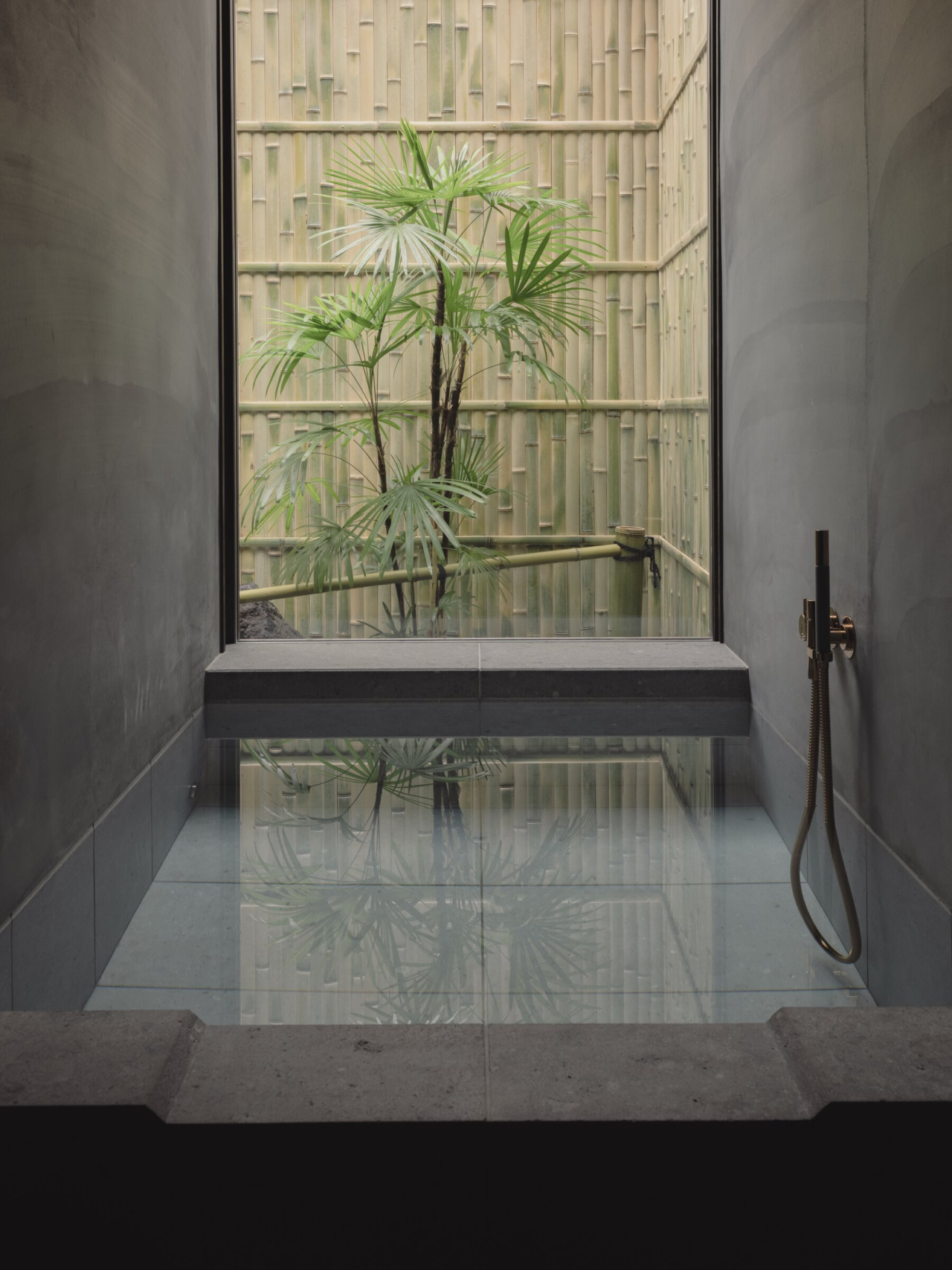
Just behind Bukkoji Temple, a 120-year-old machiya townhouse has been restored into a single house accommodation. The project, led by Keiji Ashizawa Design, embraces the existing structure as both framework and narrative.
The renovation retains key spatial elements intrinsic to the machiya typology: timber framework, lattice screens, shoji panels, the inner garden, and the layered sequence of spaces defined by the tori-niwa passage. Rather than imposing a new order, the intervention builds upon these features, allowing the house’s original logic to remain legible.
The layout evolves from the raised entrance (agari-kamachi), where subtle changes in floor level articulate different functions while maintaining spatial continuity. A tatami room, slightly elevated above the dining area, remains visually continuous with the ground floor. A double-height void (hibukuro) reinforces this connection, linking the dining kitchen below with the living area above through light and shared volume.
In terms of materiality, the existing cedar and pine are joined by hinoki cypress and oak, alongside plaster, stone, iron, and washi paper. The ground floor, defined by deeper tones, sits close to the building’s original patina; the upper floor opens to a lighter palette, in step with the natural light it receives.
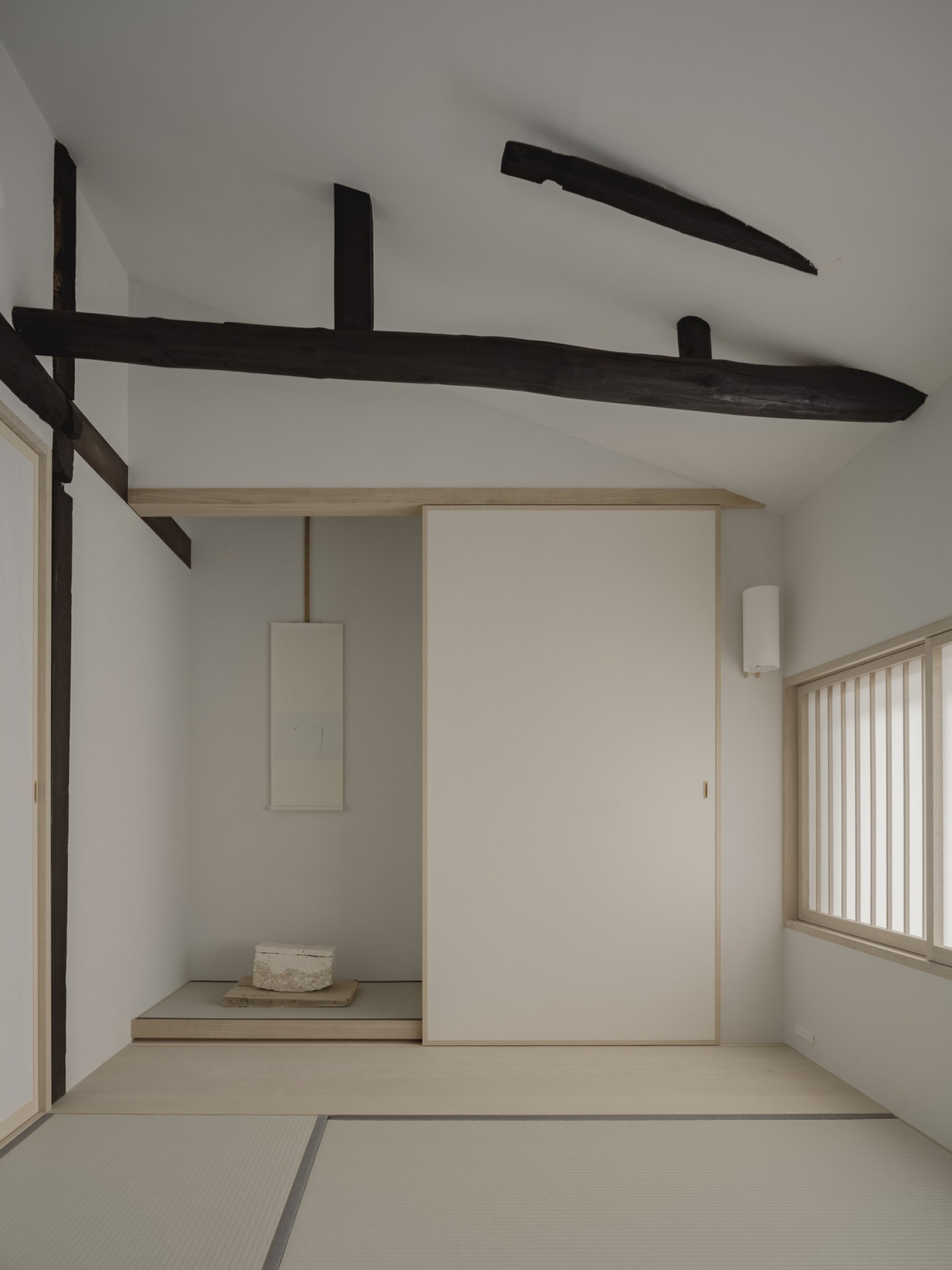
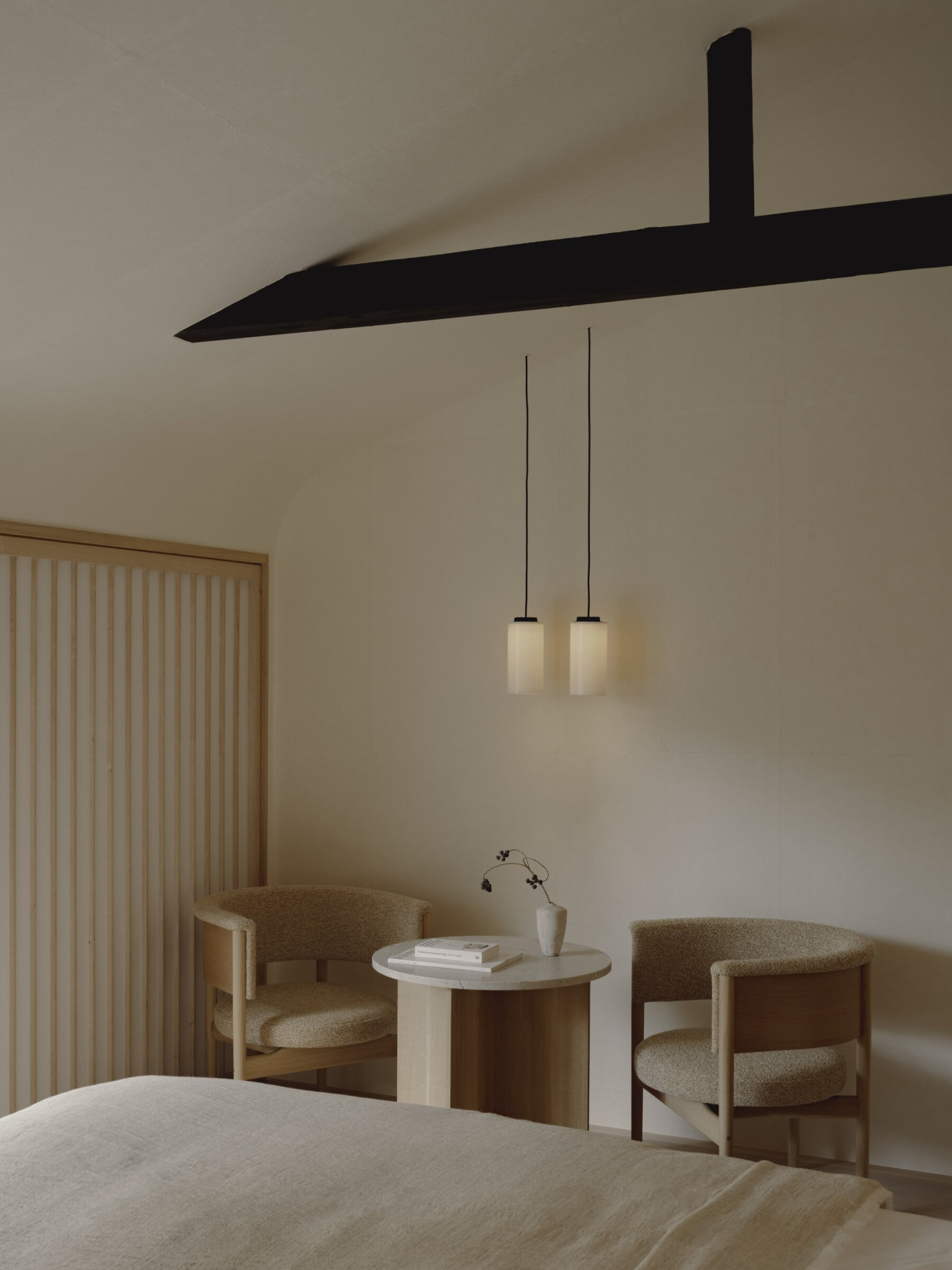
Cirio Simple 2010, Antoni Arola.
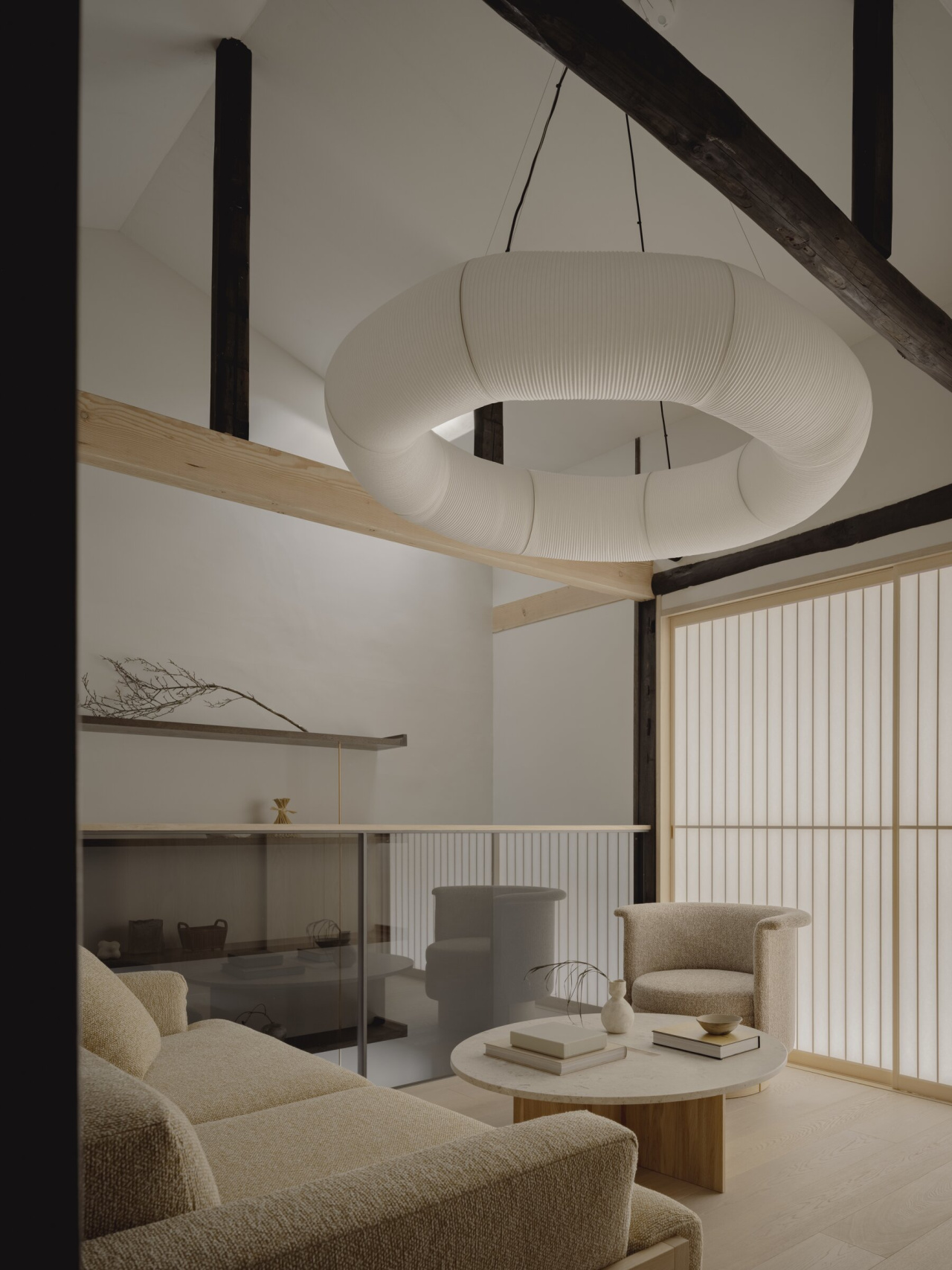
Tekio Circular 2017, Anthony Dickens.
Japanese architecture has long understood light as something to be tempered rather than maximized. Santa & Cole works from the same conviction: its pieces condition a space without flooding it, offering warmth without insistence. In a restored machiya, where every element earns its place through restraint, it feels like a natural fit.
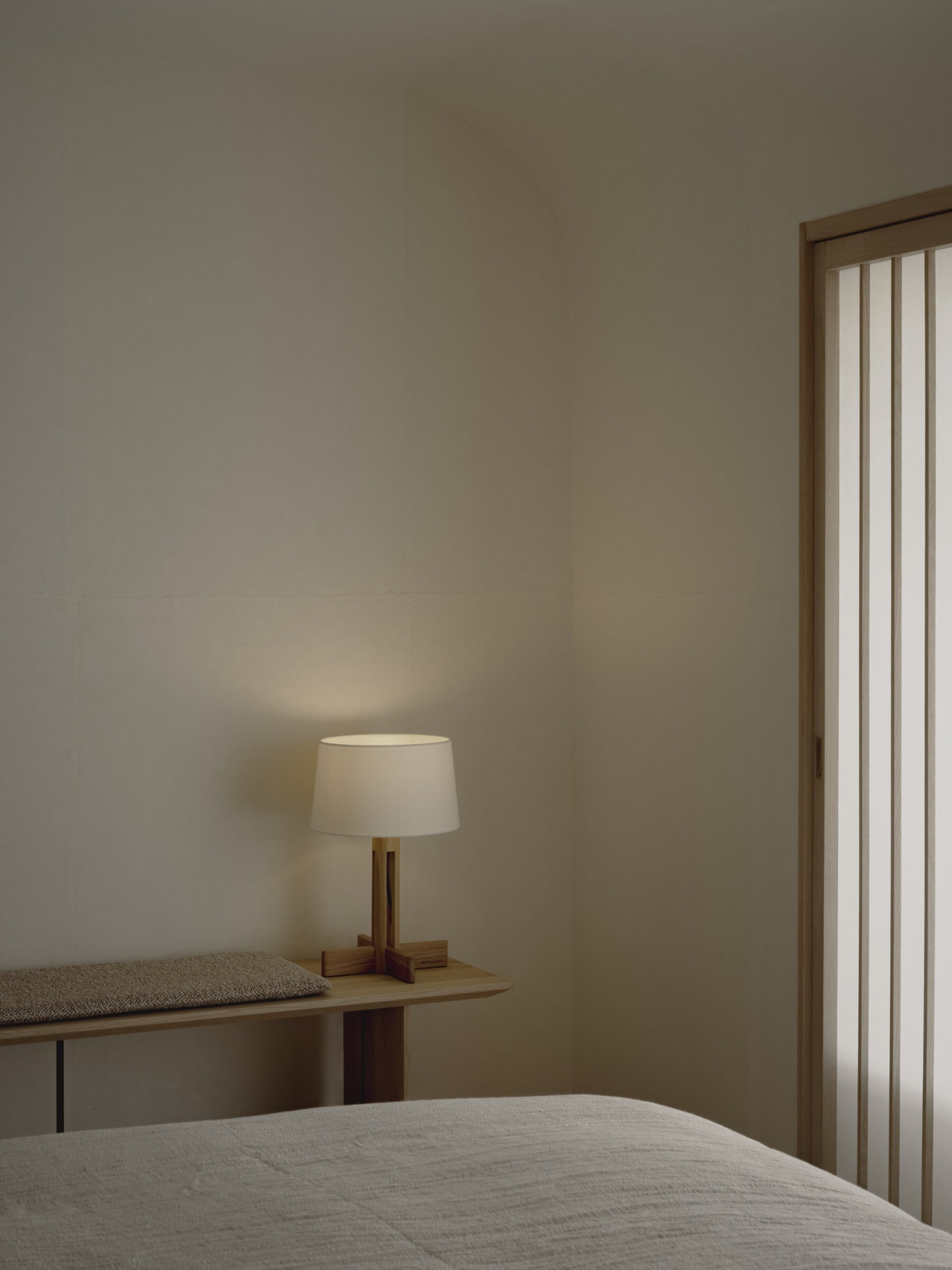
FAD Menor 1973, Miguel Milá
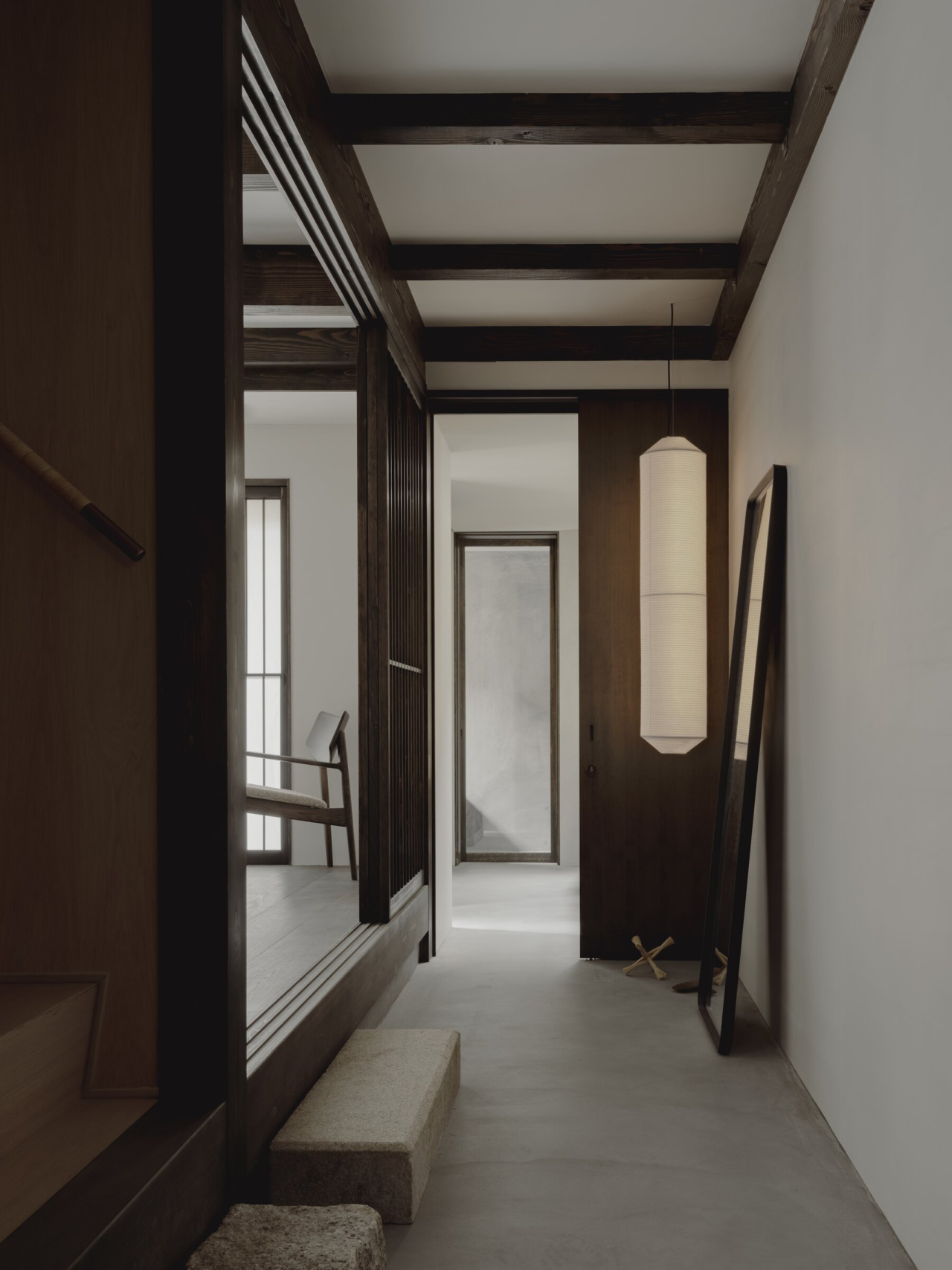
Tekio Vertical 2017, Anthony Dickens.
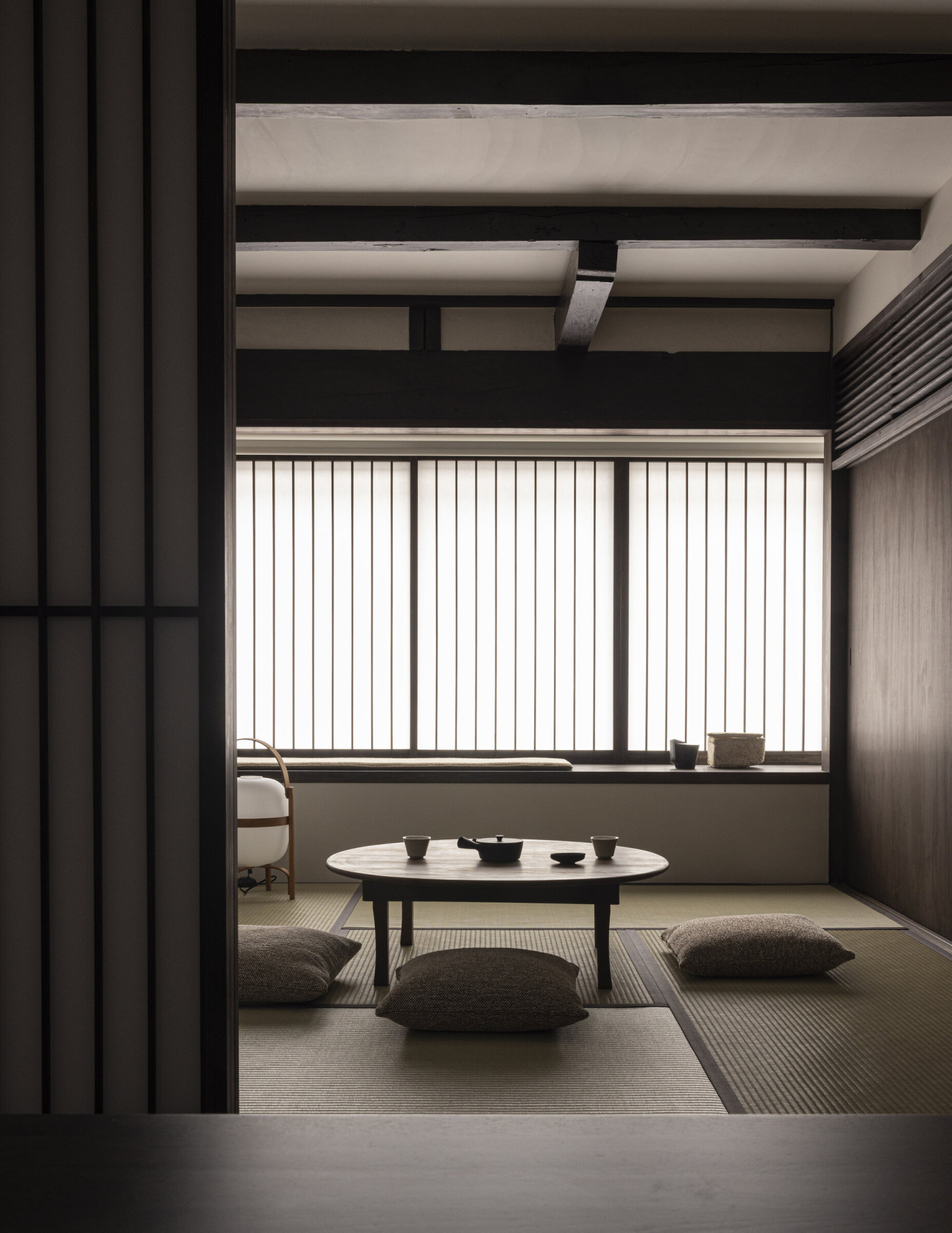
Cestita 1962, Miguel Milá.
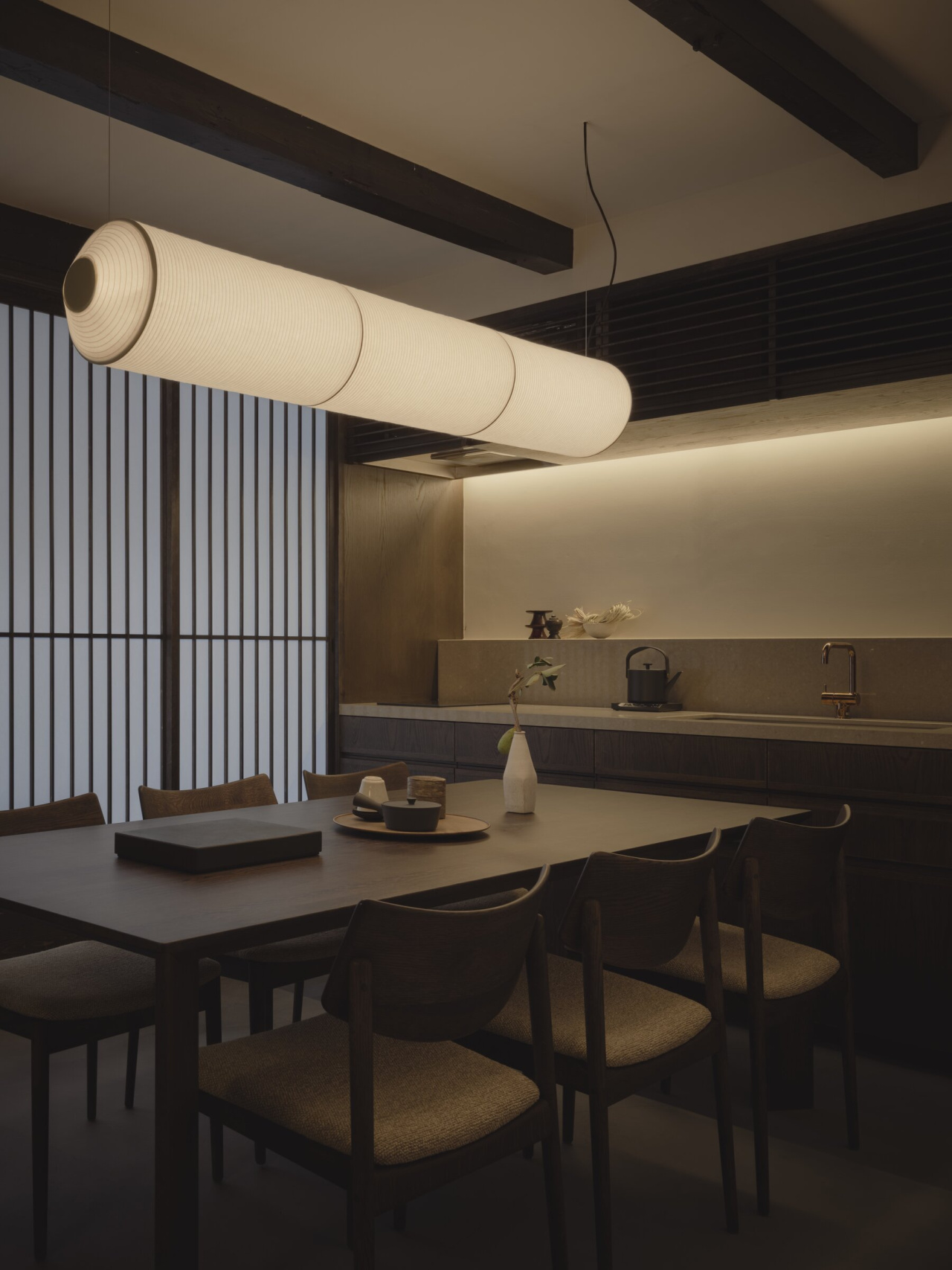
Tekio Horizontal 2017, Anthony Dickens.
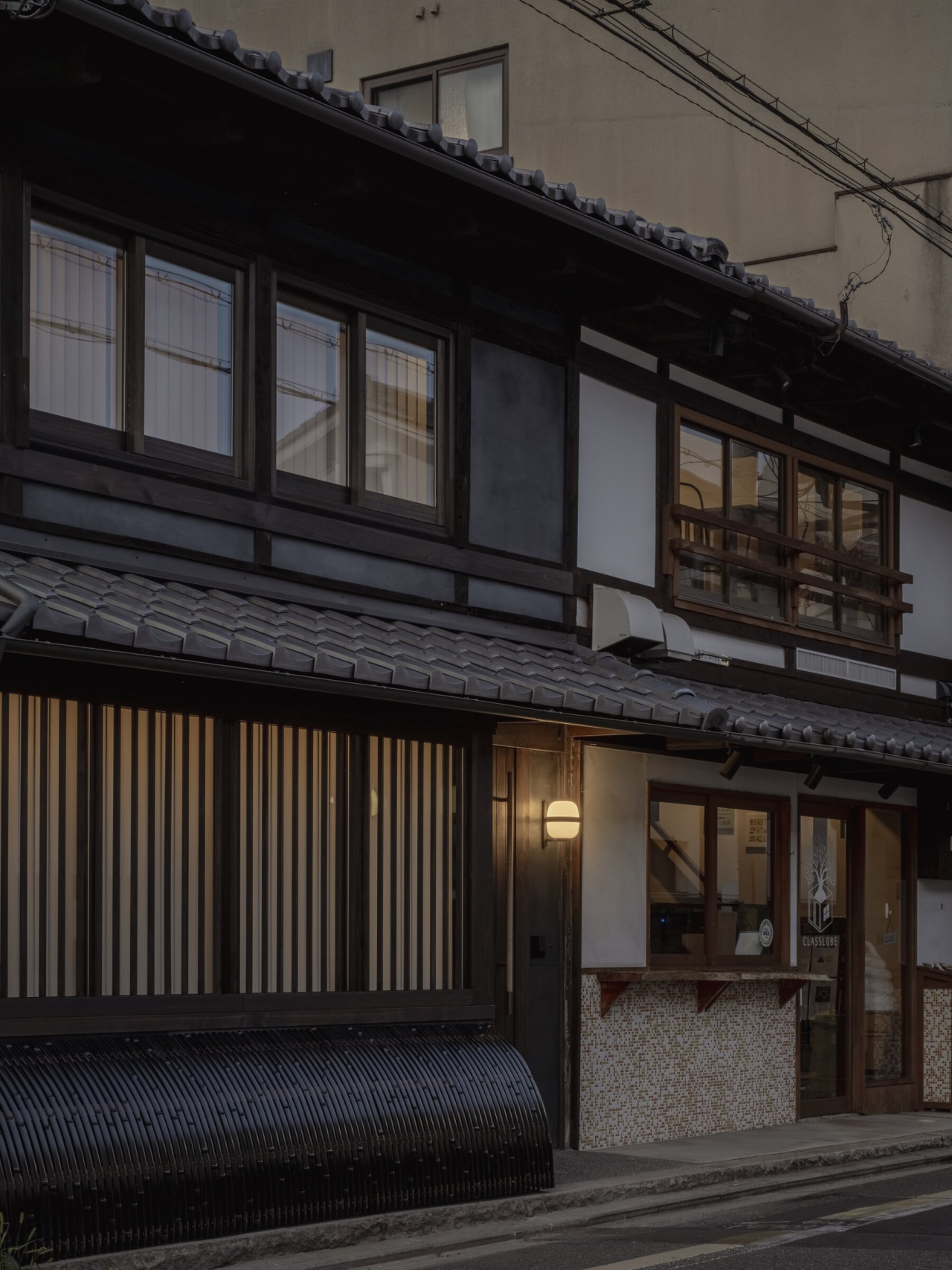
Wally Cestita 1962, Miguel Milá.